Writing a dog trainer website for humans who really love their dogs
Good With Dogs started with a dog trainer, a whole lot of confused humans, and one pretty important idea: your dog is trying to tell you something.
This passion project gave me the chance to build a dog trainer brand around kindness, understanding, and making everyday life with your dog feel a little easier.
The people coming to Good With Dogs already love their dogs. They’d just quite like to know why they’re barking at the neighbour, losing their minds on walks, ignoring every word coming out of their human’s mouth, or generally behaving in ways that make absolutely zero sense. So the messaging throughout the website keeps coming back to understanding the dog in front of you. What’s behind the behaviour? What are they communicating? What do they need from you? And how does knowing all of that help the two of you actually live together?
I created the website copy around that philosophy, pairing practical dog-training expertise with a casual, kind voice that feels more like getting advice from a very knowledgeable friend over coffee than being lectured about everything you’ve been doing wrong.
Across five pages, I introduced the Good With Dogs approach, built the trainer behind it into someone her audience could trust, clearly positioned two ways to work together, and gave each service its own sales page to turn: “Okay, but how can you actually help us?” into a very easy question to answer.
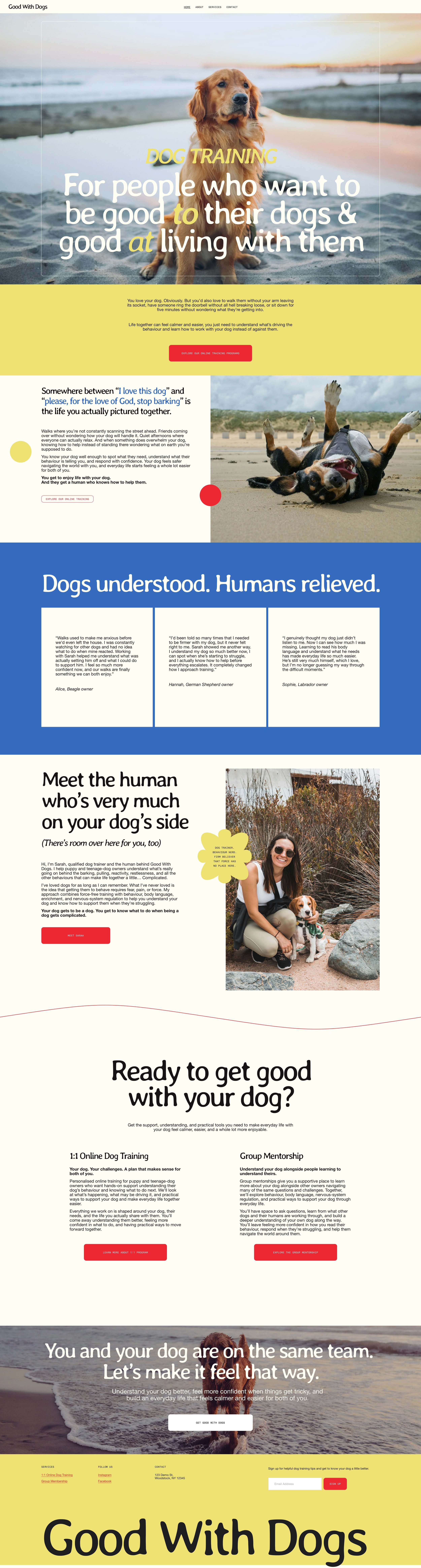
Want to see the whole thing?
You can take a peek at each page in full below:
→ View the 1:1 Online Dog Training Sales Page
→ View the Group Mentorship Sales Page
What was the project?
Good With Dogs is a passion project I created around a dog trainer with a pretty simple philosophy: life with your dog gets a whole lot easier when you understand what they’re trying to tell you.
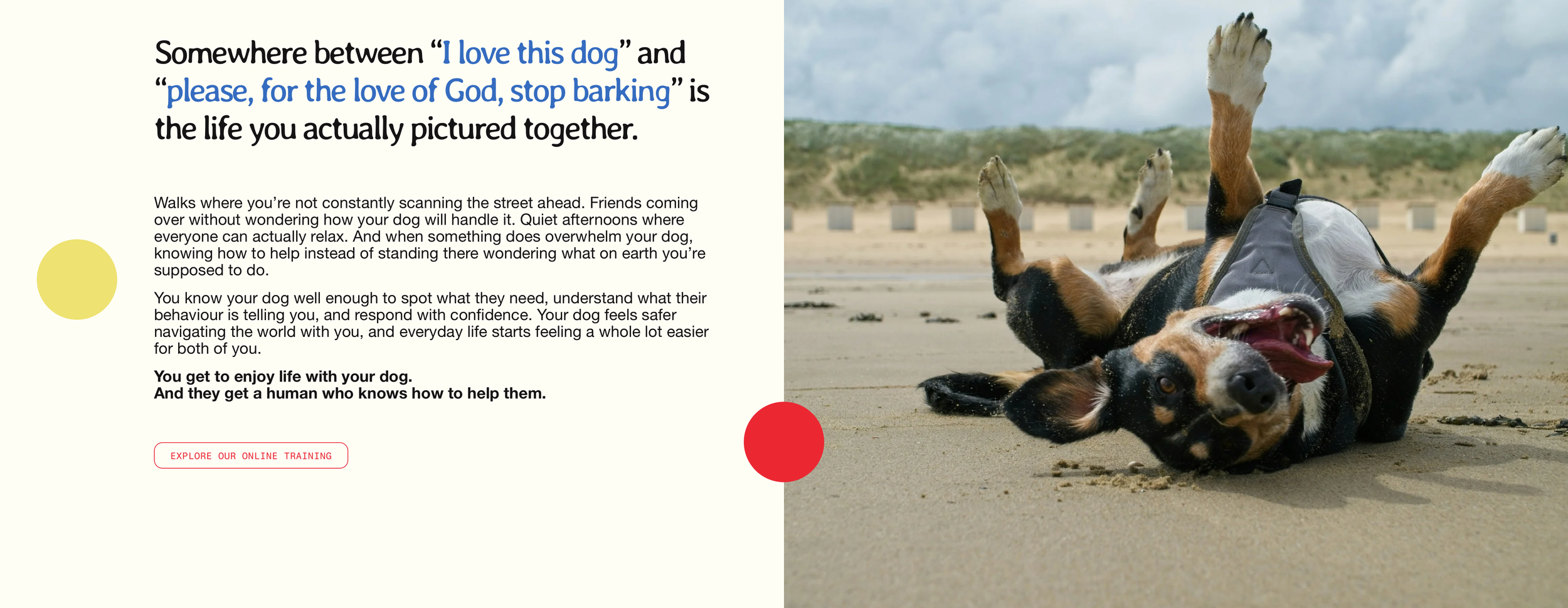
The people coming to her aren’t bad dog owners. They love their dogs. A lot. They’re just somewhere between “I would die for this animal” and “for the love of God, please stop barking.” And that’s where Good With Dogs comes in.
Her approach focuses on helping people understand what’s behind their dog’s behaviour, learn how to respond to it, and build the kind of everyday communication that makes life feel easier for both of them. That philosophy shaped the entire website.
The copy needed to speak to people who were frustrated without making them feel judged, establish Sarah as someone who genuinely understands dogs, and explain an approach to training that goes deeper than teaching a dog to perform the “right” behaviour on command.
And since kindness is such a big part of the brand, the voice needed to feel like the person you’d actually want helping you when your dog has spent the last 20 minutes losing their mind at the doorbell: friendly, calm, practical, and very easy to talk to.
Pages:
Homepage
About
Services
1:1 Online Dog Training Sales Page
Group Mentorship Sales Page
Who were we talking to?
People who love their dogs dearly and would also quite like to understand what the hell is going on inside their heads.
Maybe their dog barks at everything that moves. Pulls on walks. Struggles around other dogs. Ignores them at precisely the moment they really, really need them not to. Or maybe there isn’t one huge behaviour problem at all. They just want to communicate better and feel a little more confident about what they’re doing.
They’ve probably Googled. They’ve probably tried a few things. And there’s a decent chance they’ve wondered whether they’re somehow getting this whole dog-owner thing wrong.
That last part matters. The copy couldn’t pile more guilt onto someone who was already frustrated. We needed to acknowledge the difficult bits while making it very clear that asking for help doesn’t mean you’ve failed your dog.
They needed practical support, yes. They also needed someone who could look at the dog in front of them, explain what was happening, and help them move forward with a little more understanding and a lot less guessing.
What was the goal?
Make dog training feel less like getting your dog to obey and more like finally learning how to understand each other.
Good With Dogs has a distinct point of view: behaviour tells you something.
So throughout the website, I kept bringing the messaging back to understanding what’s happening underneath the behaviour. What is the dog communicating? Why are they responding this way? What do they need from their human? And what can their human do differently now that they understand it?
That gave us a much stronger message than simply promising a better-behaved dog. We could talk about the things people absolutely do want — calmer walks, less barking, easier everyday life, more confidence — while connecting those outcomes to Sarah’s philosophy and approach.
The website also needed to make her two ways to work together easy to understand. 1:1 Online Dog Training gives someone personalised support around their dog and their specific challenges, while Group Mentorship gives people ongoing guidance, practical education, and a group of humans figuring their dogs out alongside them.
Across both, the same idea holds everything together: You understand your dog better. Your dog gets better support. And everyday life starts feeling a whole lot easier for both of you.
A few of my favorite bits
Saying the thing the dog owner is already thinking
Why I love it:
I love this one because there’s zero pretending that being a loving dog owner means finding everything your dog does adorable. You can absolutely adore them and still be losing your mind over the barking.
That gives us an easy way into the reader’s actual frustration while keeping the tone affectionate rather than critical. We acknowledge what’s hard, remind them that struggling with a behaviour doesn’t change how much they love their dog, and then bring the conversation back to what they really want: a life together that feels good for both of them.
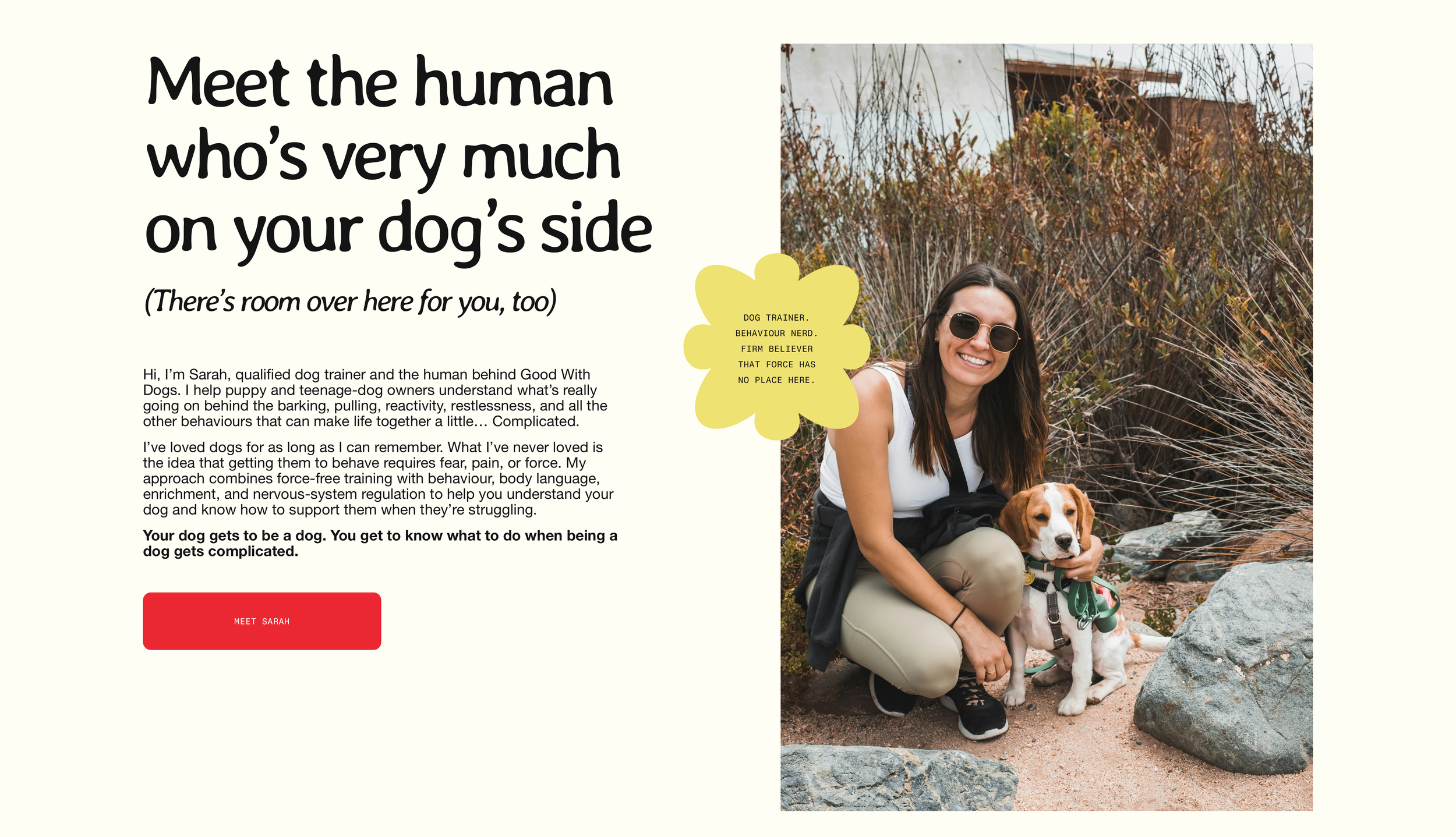
Introducing the human on your dog’s side
Why I love it:
By this point on the homepage, we’ve talked a lot about understanding your dog. This section gives the reader a chance to meet the person who’s going to help them do that.
“Very much on your dog’s side” immediately reinforces Sarah’s approach to training. She cares about what the dog is communicating, what they need, and how the human can support them. Then the little “There’s room over here for you, too” keeps the human from feeling like they’ve somehow become the villain in their own dog-training story. That balance matters for this brand. Sarah can advocate for the dog while still acknowledging that the person standing at the other end of the leash might be frustrated, confused, or completely out of ideas. She’s there to help both of them understand each other a little better. It also lets us introduce Sarah’s experience and approach naturally before someone reaches the full About page, giving them an actual human to connect with as they keep scrolling.
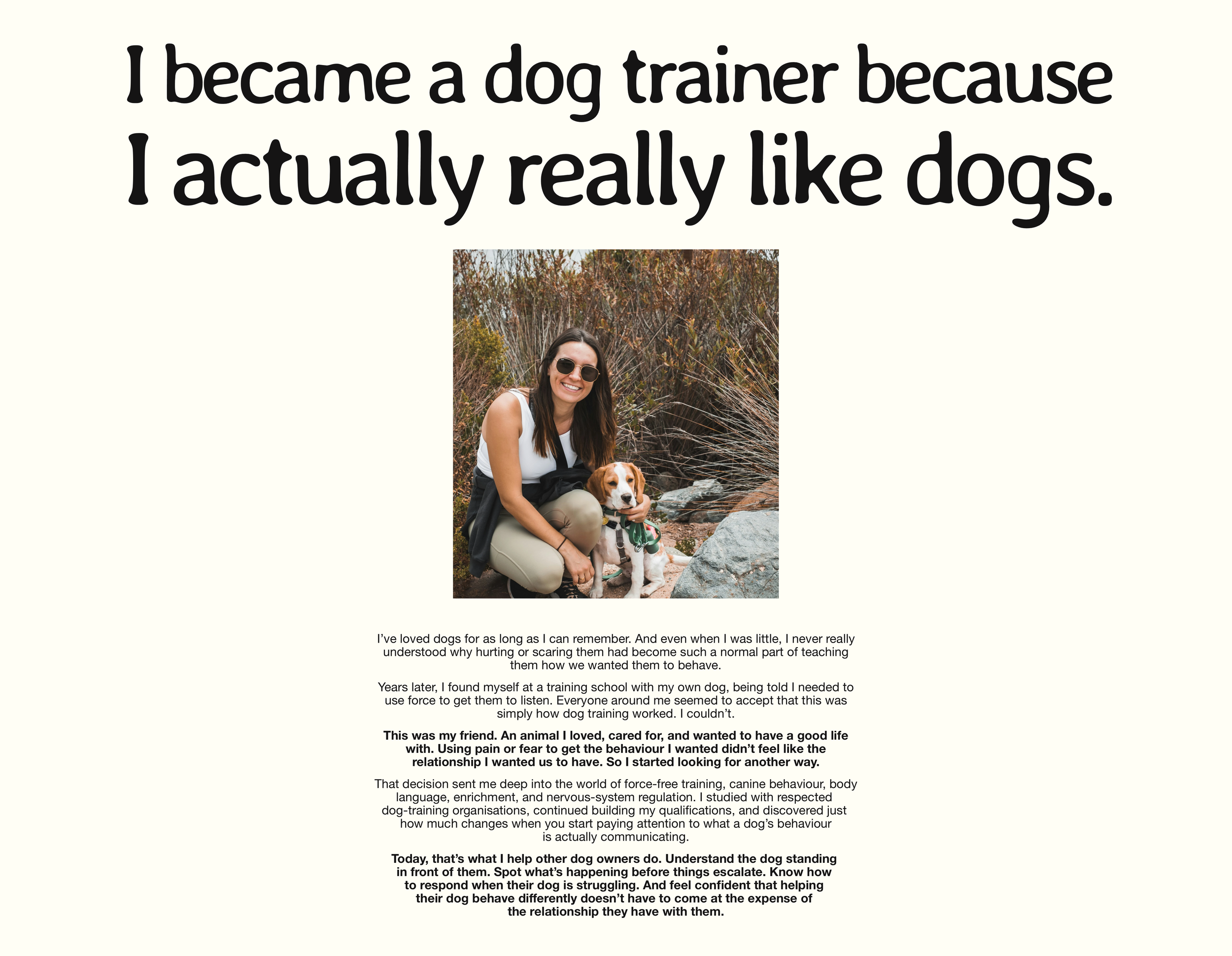
Making the About page about her philosophy
Why I love it:
It sounds almost ridiculously obvious, which is exactly why I like it. The rest of the page gives that sentence meaning. Sarah talks about wanting to understand what her own dog was communicating, studying behaviour and training, and eventually developing an approach centred around helping dogs and humans understand each other better. So we get her experience and expertise, but we also understand what kind of trainer she decided to become and why. That matters when someone is choosing the person they’re going to trust with an animal they love.
Turning “dog training” into a much more human problem
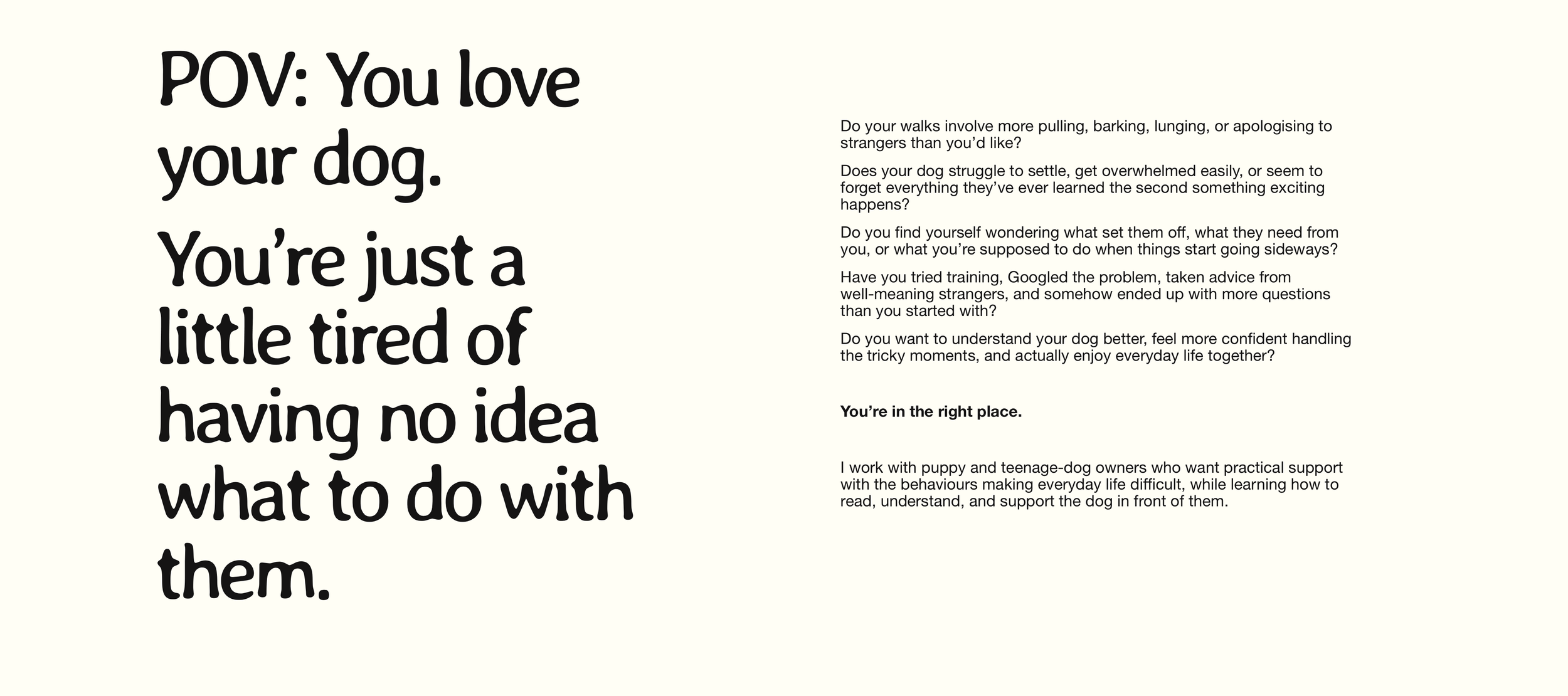
Why I love it:
This could have been a section listing problems: barking, pulling, reactivity, recall, jumping, and so on. Those things matter, and we talk about them elsewhere. Here, though, I wanted to capture the feeling underneath all of them.
“I have no idea what to do” is the frustrating bit. It speaks to the person who has already tried Googling, asking friends, watching videos, or throwing different techniques at the problem and still doesn’t really understand why their dog is doing what they’re doing. That tees up Sarah’s approach beautifully: first we understand the dog in front of us. Then we can figure out what support actually makes sense.
Building the instruction manual your dog forgot to bring
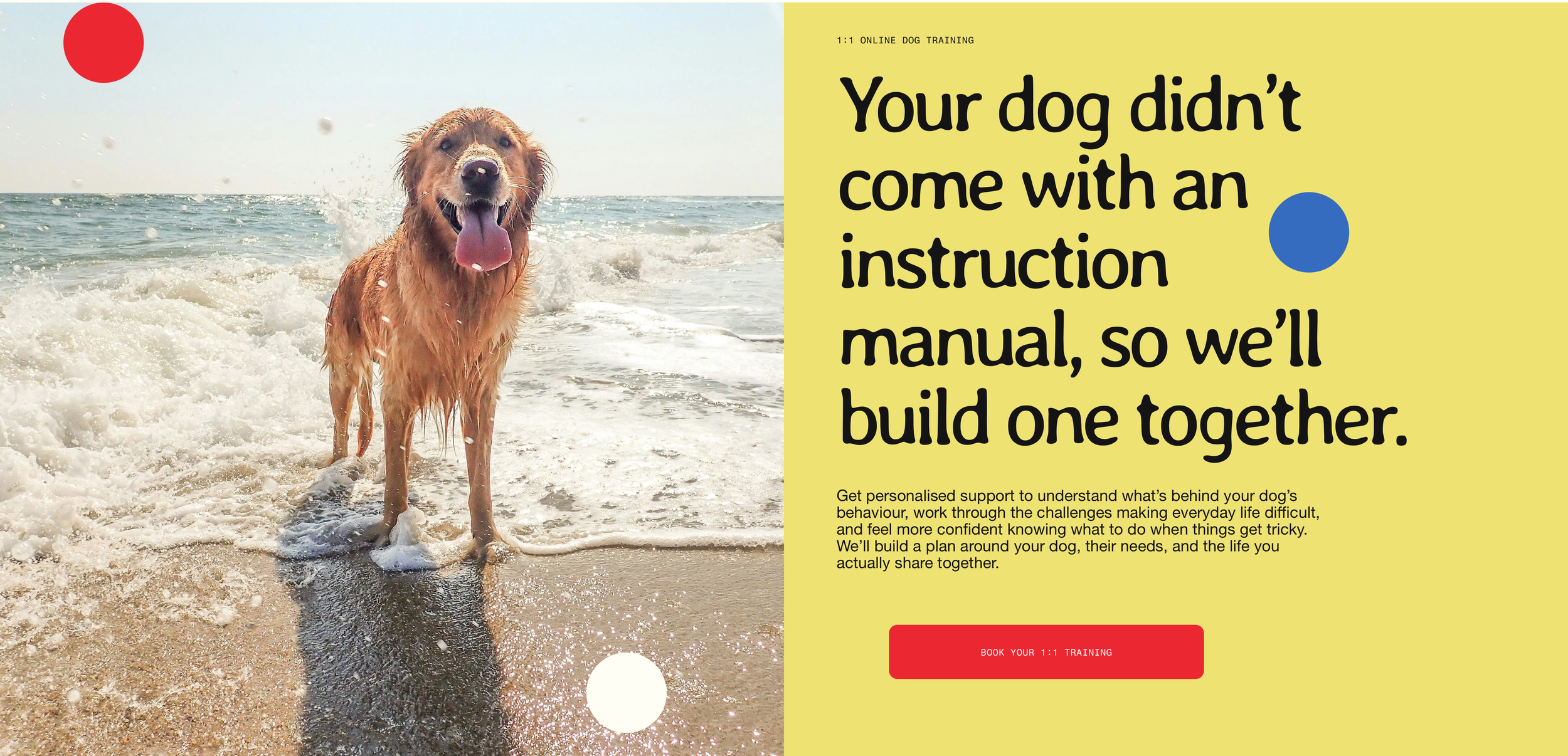
Why I love it:
Every dog owner has probably wished their dog came with some kind of manual at least once. This headline takes that familiar feeling and uses it to explain exactly what the 1:1 support is there to do. You’re figuring out the dog in front of you: what’s behind their behaviour, what they need, what helps, what makes things harder, and how you can respond when something comes up. Over time, all of that understanding gives you something pretty close to the instruction manual you wish they’d arrived with.
And “we’ll build one together” is important too. Sarah isn’t swooping in with a universal set of rules and sending you on your way. She brings the behaviour expertise, you bring everything you know about your dog and your life, and together you work out what actually makes sense for both of you. It turns a fairly abstract promise like “personalised dog training” into something you can immediately understand and picture, while reinforcing the whole Good With Dogs philosophy at the same time.
Making group support feel like relief
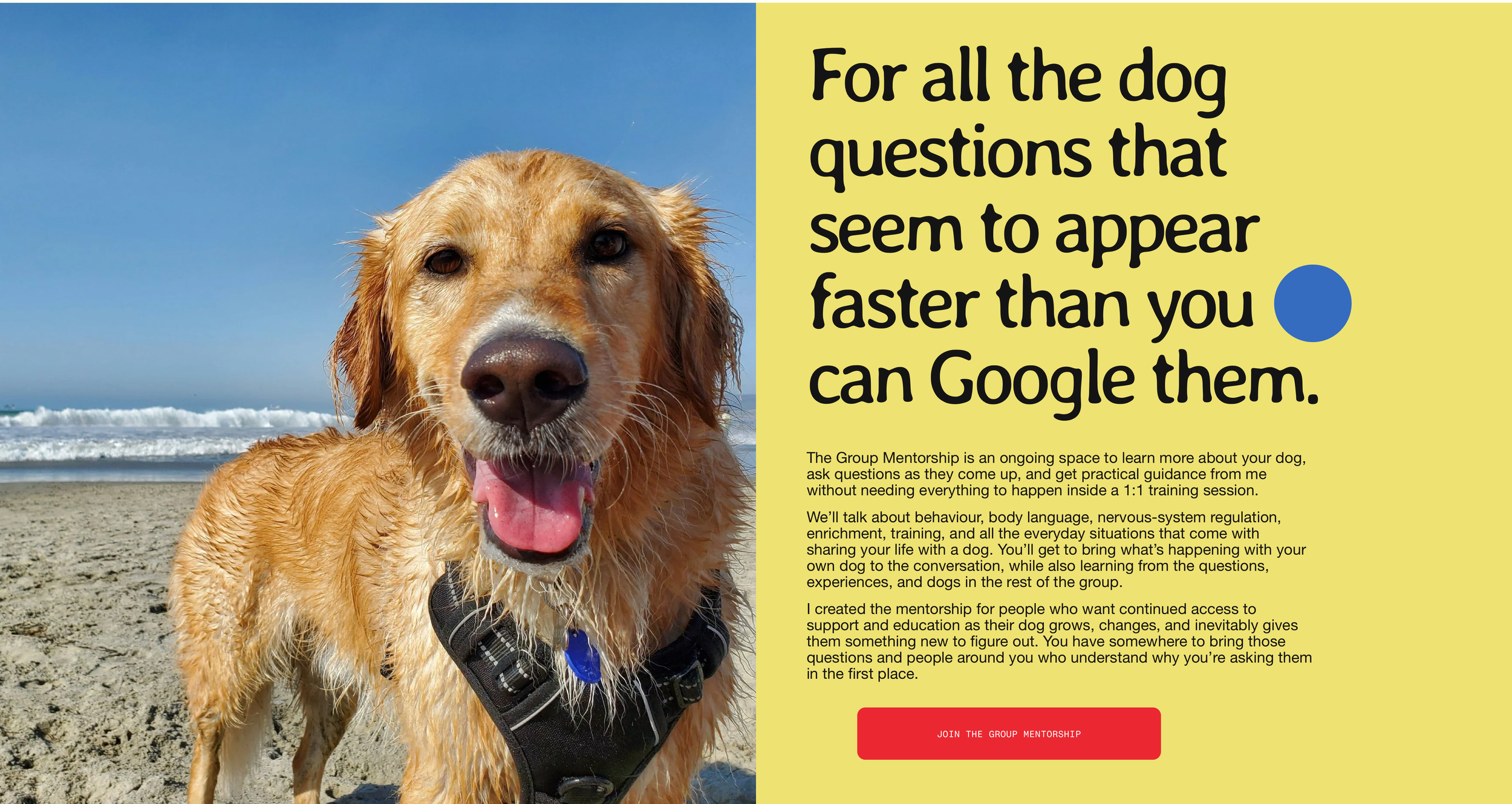
Why I love it:
This one gets right to the reason the Group Mentorship exists. Dog ownership has a funny way of producing a new question approximately five minutes after you answered the previous one. And Google can give you 47 different answers before breakfast. The copy positions the group as a place where those questions have somewhere to go. You can learn why your dog does what they do, ask for help when something comes up, and get guidance from someone who understands behaviour rather than trying to piece everything together yourself. It makes ongoing support feel useful in normal, everyday dog-owner life, which is exactly where this offer needs to live.
So, what did we do?
We built Good With Dogs around one central belief: understanding your dog makes it much easier to know what to do next.
That idea runs through every page, from the first homepage headline to the individual service sales pages.
Across the website, I:
→ Positioned Sarah’s approach around understanding behaviour, giving the brand a clear philosophy that could carry across every service
→ Spoke directly to the frustrations dog owners are actually experiencing: barking, pulling, uncertainty, conflicting advice, and the “what the hell am I supposed to do now?”
→ Kept kindness baked into the messaging, so readers could recognize their struggles without feeling like they were being told they’d failed their dog
→ Connected Sarah’s personal story to her approach, showing where her philosophy came from and why she cares so much about understanding the dog in front of her
→ Made the two services easy to distinguish, with personalised 1:1 support for specific dogs and challenges, and ongoing group guidance for people who want education, answers, and support along the way
→ Carried the same casual, conversational voice across five pages, keeping the brand friendly and approachable even when explaining behaviour, training, process, and offer details
→ Used the sales pages to answer the practical questions that come before buying, including what’s included, how each service works, who it’s for, testimonials, and FAQs
The result is a brand that understands something pretty important about its audience: They already love their dogs. They just want to get better at understanding them. And once that starts happening, the barking, walks, training, communication, and everyday living together can start feeling a whole lot easier.
Like what you see?
Got a brand with plenty to say, but your website isn’t quite saying it like you yet? Hi. That’s kind of my thing.
I write personality-packed website and sales copy that gives your brand a clear point of view, sounds like an actual human, and helps the right people understand exactly why they should work with you. Take a peek at my copywriting services and see what we could do with yours.